Wildlife highlights and photography tips specific to Mashpi
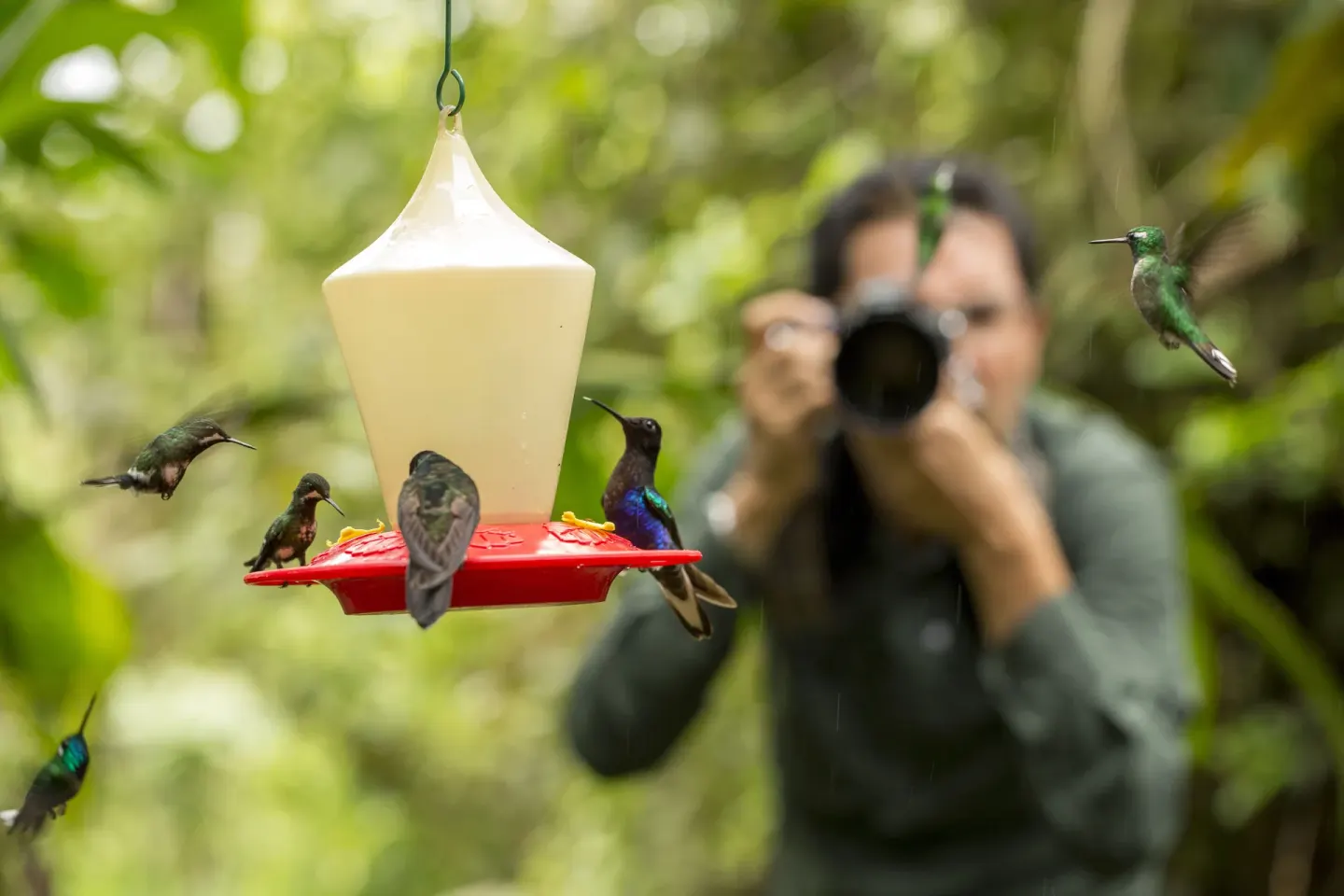
Mashpi's cloud forest is richest at canopy and understory levels: expect abundant hummingbirds, frogs (including glass frogs), and many small mammals and insects. For photos, use a fast lens and high-ISO techniques for low light, position yourself at the hummingbird garden or observation platforms, and plan early-morning and misty-hour shots when activity and atmospherics peak.
In this guide
What wildlife to expect at Mashpi Lodge
The Mashpi Reserve records hundreds of bird species (early-morning guided birdwatching is daily) and a large variety of frogs, insects, and small mammals typical of a Chocó Andino cloud forest.
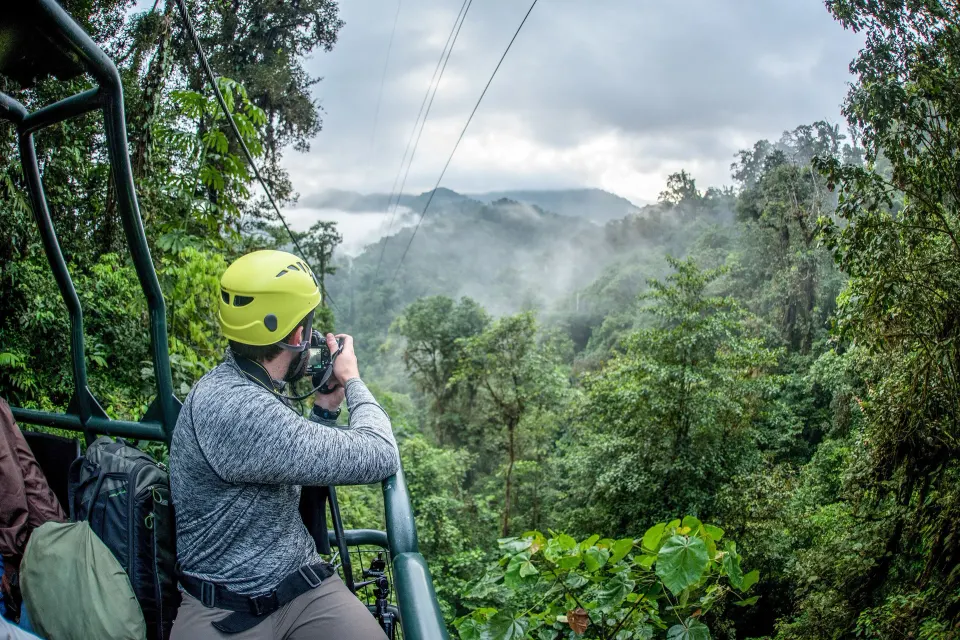
Highlights commonly seen by guests include many hummingbird species at the lodge's feeding stations, glass frogs and other amphibians after rain, and canopy species visible from the observation tower and Dragonfly gondola.
- Hummingbirds: up to 19 species visible at the lodge hummingbird garden viewpoint
- Frogs: glass frogs and other amphibians are most active in wet months
- Canopy species: birds and butterflies often show on and above the observation platform
- No guarantee of large mammals; sightings focus on birds, amphibians, insects and canopy life
| Taxon | Where to see | Best time |
|---|---|---|
| Hummingbirds | Hummingbird garden / feeders, observation deck | Early morning and late afternoon |
| Glass frogs & amphibians | Night walks, streamside trails, Life Center | Night / wet season |
| Canopy birds & butterflies | Observation tower, Dragonfly gondola, Sky Bike area | Morning and during clearer windows |
Best places for wildlife photography on site
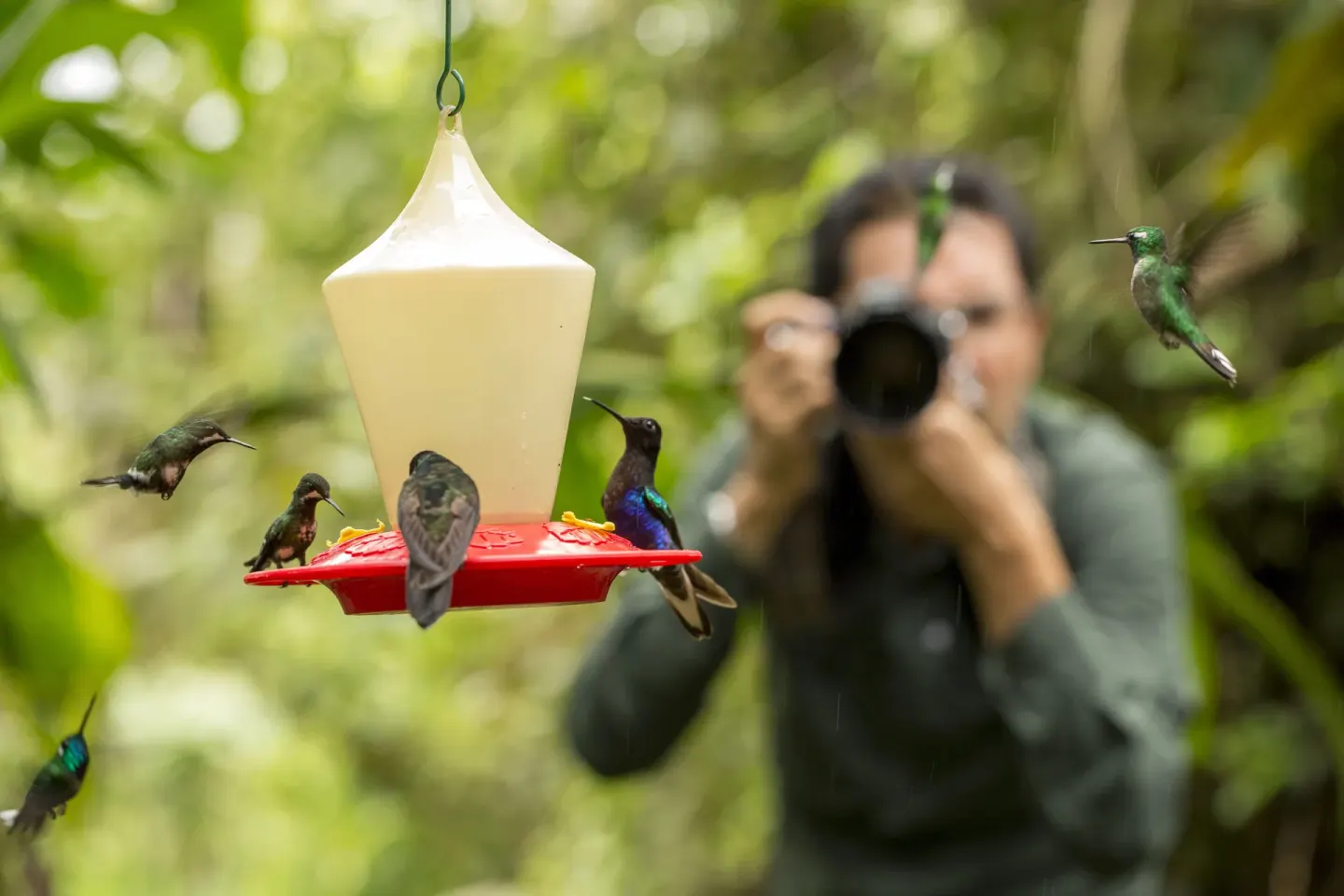
The hummingbird garden and feeding stations are the most reliable close-range photo opportunities for birds — you can photograph perched or hovering birds at feeders with a short telephoto or 70–200mm lens.
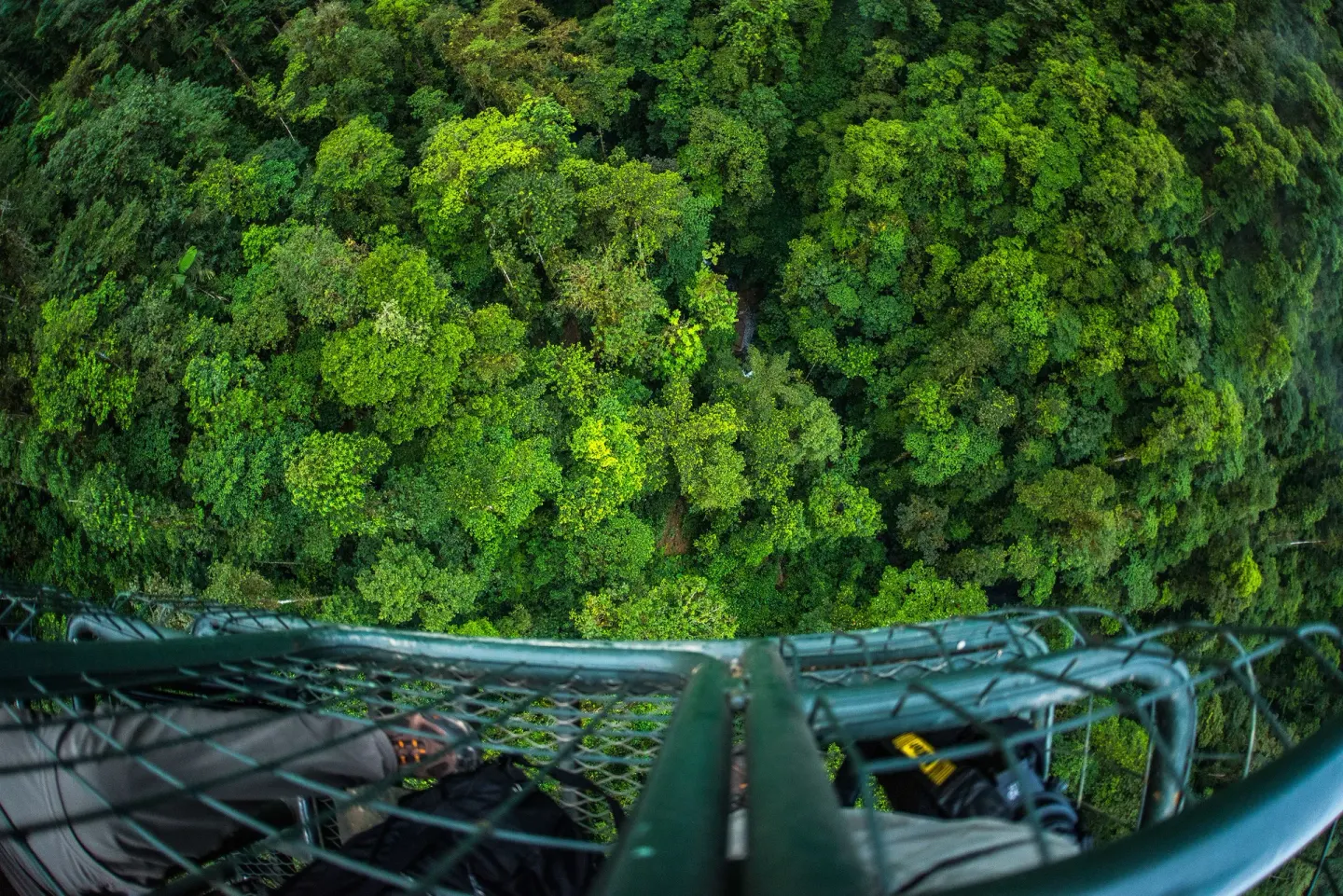
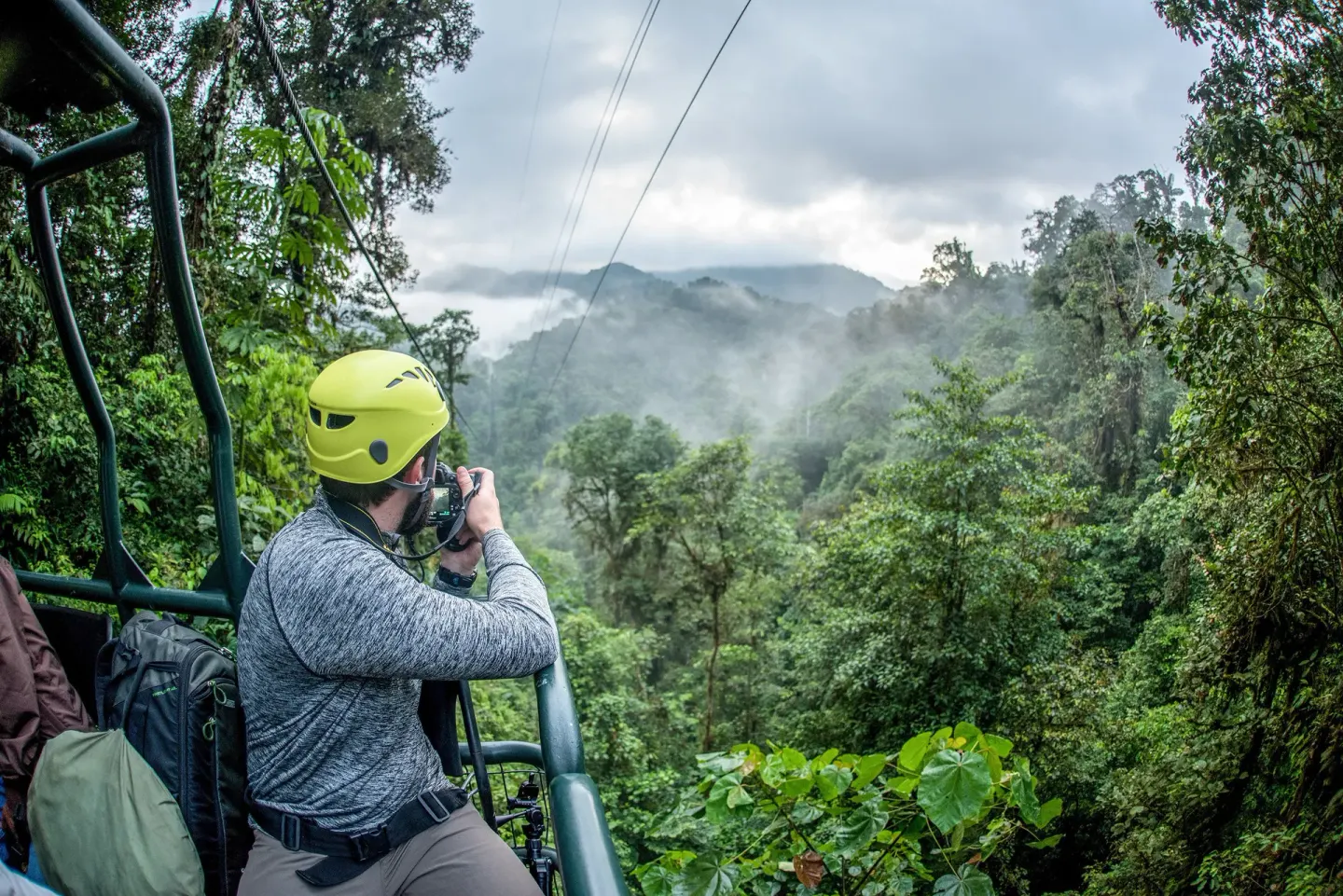
Higher-elevation viewpoints — the observation tower and Dragonfly gondola — let you photograph canopy-level activity, silhouettes, and wide forest compositions; the viewing platform also gives a strong sense of scale and misty layers.
- Hummingbird garden/feeding station — close, fast action
- Observation tower / viewing platform — canopy perspective and panoramas
- Dragonfly canopy gondola and Sky Bike approach — motion and elevated angles
- Night walks and Life Center — macro shots of frogs, insects, and small reptiles
| Spot | Type of shots |
|---|---|
| Hummingbird garden | Close portraits, hovering wing blur, feeder interactions |
| Observation tower | Canopy panoramas, distant birds, layered mist |
| Life Center / trails | Macro insects, frogs, close habitat details |
Practical camera settings and gear tips
Low light and fast action are the technical challenges at Mashpi: use fast lenses (f/2.8–f/4), high ISO with a camera that handles noise well, and shutter speeds of 1/1000s or faster for hovering hummingbirds.
Bring a short-tele to mid-tele zoom (70–200mm) plus a longer tele if you want tighter bird portraits; a macro or 100mm lens is useful for frogs and insects on night walks.
- Hummingbirds: 1/1000–1/4000s, f/4–f/8, ISO 800–3200 (adjust by light)
- Canopy and panoramas: 1/125–1/500s, f/5.6–f/11, ISO 200–800
- Macro/night walk: tripod or monopod, f/5.6–f/11, slower shutter with flash or headlamp
- Accessories: extra batteries (cold + humidity drain power), rain cover, microfibre cloths for lenses
| Subject | Recommended focal length | Notes |
|---|---|---|
| Hummingbirds | 70–200mm (crop users: 300–400mm equivalent) | Fast AF, high shutter speed |
| Frogs & insects | 90–105mm macro | Use low-angle light; consider a small flash/diffuser |
| Canopy vistas | 24–70mm | Shoot in the morning for mist and layers |
Timing, weather and seasonal notes
Mashpi's cloud forest has a drier season (roughly June–September) with clearer windows and generally better visibility, and a wetter season (October–May) that brings more mist, dramatic waterfalls, and higher amphibian and plant activity.
Mornings around dawn are the most productive for bird activity and for catching mist layers; night walks after dark are the time to find frogs and nocturnal invertebrates.
- Drier season: clearer canopy views, easier access on gravel roads
- Wetter season: more frogs, orchids and flowing waterfalls — expect higher humidity
- Daily: early morning (dawn–09:00) for birds; just after dark for night-walk amphibians
| Season | Photo advantages |
|---|---|
| June–September (drier) | Better light and clearer canopy vistas |
| October–May (wetter) | More frogs, orchids and dramatic waterfalls |
| Any time | Frequent mist — use it for mood shots |
Guided experiences that improve photography chances
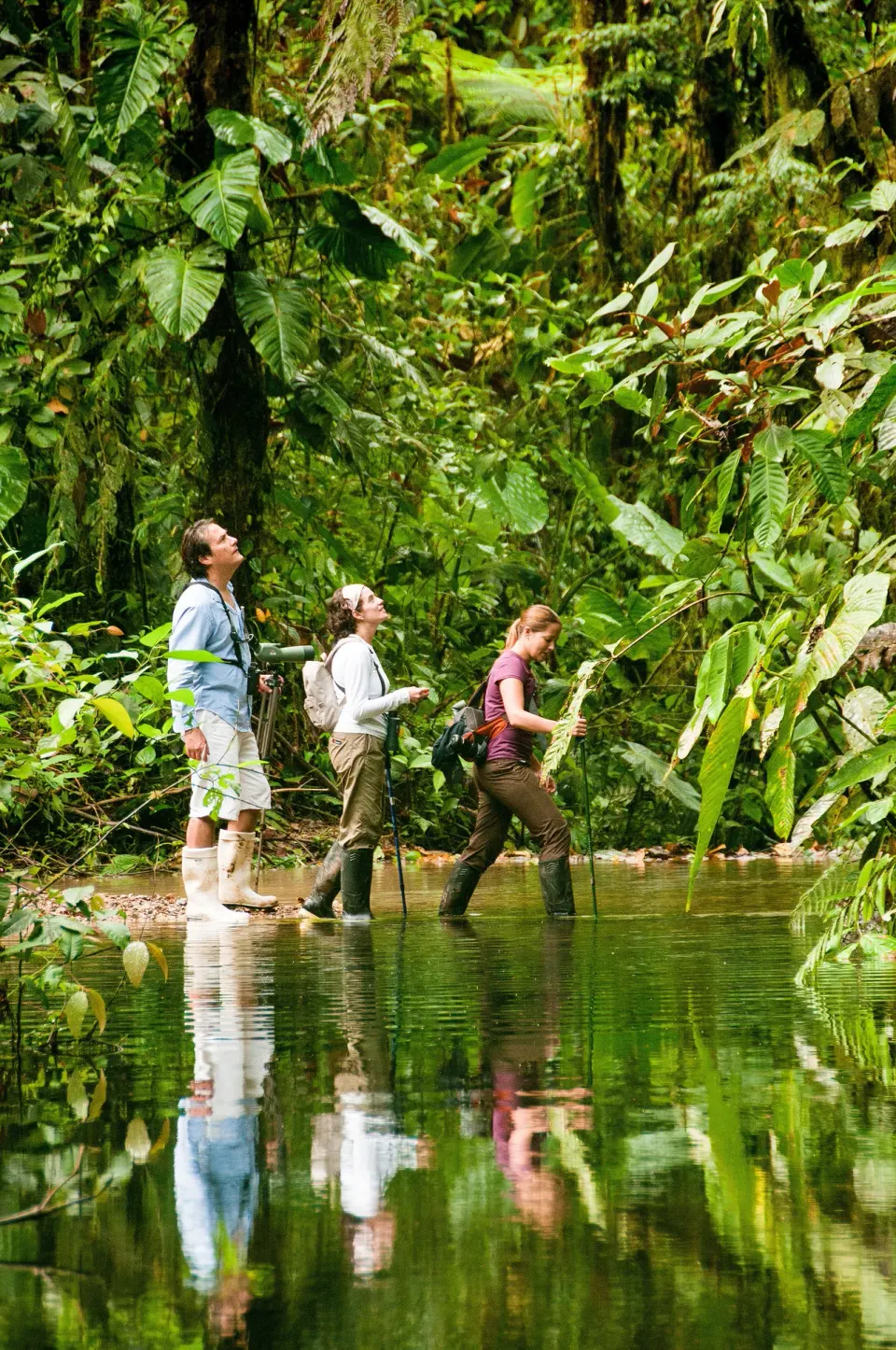
Daily naturalist-led birdwatching and guided hikes put you where wildlife is most active and the guides can help locate subjects, suggest camera positions, and time shoots for the best light.
Night walks and Life Center visits are especially productive for macro and amphibian photography; guides bring headlamps and identification aids and know safe, low-impact ways to approach small animals.
- Book early-morning birdwatching with a guide for feeder and canopy action
- Join a night walk for frogs and insects with a guide who knows local hotspots
- Plan a Life Center visit to access research displays and controlled environments for close-ups
| Guided activity | Why it helps photographers |
|---|---|
| Early-morning birdwatching | Local knowledge plus focused time at feeders and trails |
| Night walks | Guides reveal nocturnal species and provide safe lighting |
| Life Center | Access to researchers and specimens for identification and close shots |
Lodge logistics and room considerations for photographers
Mashpi Lodge includes all meals and many guided excursions; plan your shoots around scheduled activity times (breakfast at 7:30 AM, lunch 12:30 PM, dinner 7:30 PM) and coordinate with guides for early starts.
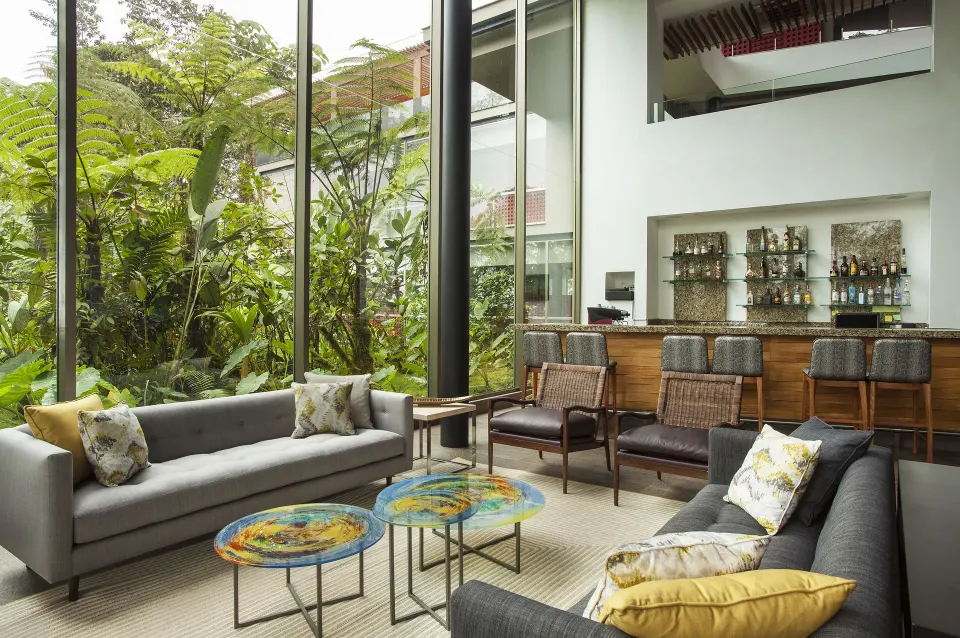
There are several room types with forest-facing windows that double as convenient hideouts for quick bird photography from your room window or balcony.
- Rooms to note: Luxury Double Room, 1 King Bed; Luxury Room, 2 Double Beds; Luxury Single Room, 1 Double Bed; Luxury Suite; Luxury or Room
- All rooms have forest-facing windows — useful for quick, low-disturbance shots
- Bring minimal gear to meals and briefings; leave larger tripods locked in your room and carry a monopod or beanbag for field work
| Practical note | Action |
|---|---|
| Check-in window | Arrivals usually start at 12:00 noon (confirm exact time with lodge) |
| Wi‑Fi | Complimentary in rooms and public areas — good for quick image backups |
| Hot tub / Samay Wellness Center | Reserve private slots if you plan photography breaks there |